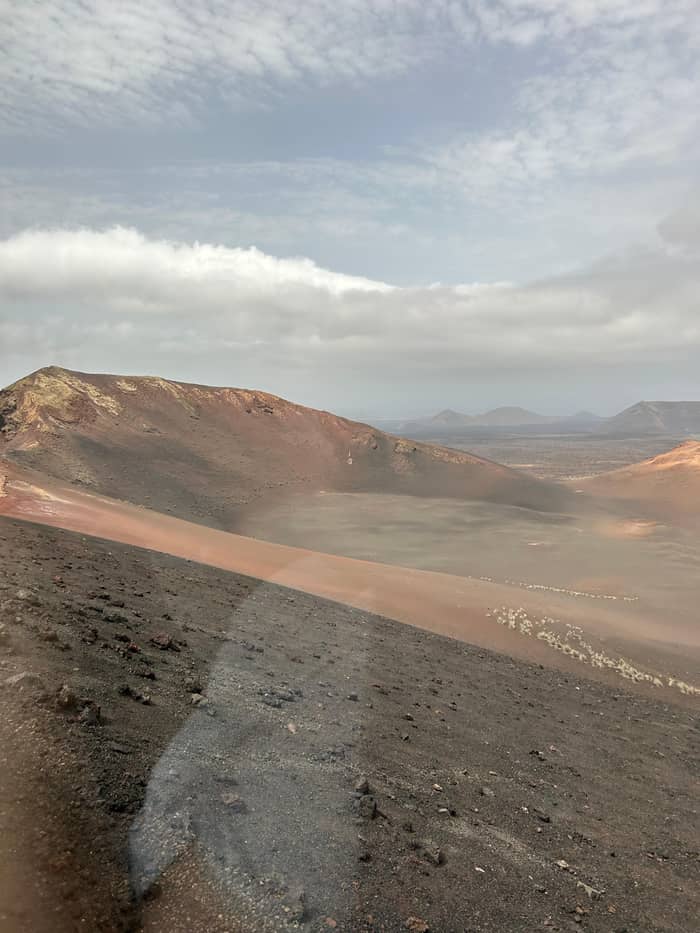
On the animal
Ride
A short path ride
See the craters tourGuides
Language
Currency
Find a datefrom €61 · cancelling is freeInteractive tick list
Timanfaya volcanic craters tour
★ 4.4 · From 2,523 reviews
Checklist · 6 points
Check things off as you go; your progress is kept on this device.
0 / 6 ready
You are ready. Only your date and your pickup point on Lanzarote are left to choose.
Book your seatWhere the dromedaries wait, who provides the ride, how it fits a coach tour, what you pay on the spot and what to do instead if you would rather keep your feet on the ground.
Editorial team, timanfayatour.com · Updated November 24, 2026 · Allow 7 min
Facts at a glance
The Timanfaya National Park camel ride starts at a place called the Echadero de los Camellos, which the park brochure names as the departure point of the camel rides.1 The brochure also says the service is provided by Yaiza Town Council, at the current rates, so the ride is a municipal service and its price is set outside our tour.1 Ask the staff for the rate on the day you go.
The station sits on the main road through the park. The park's visitor guide places it along the road 2.5 km before the El Taro entrance of the Montañas del Fuego tourist centre, so the station lies close to the park entrance.5 The same station houses the Museum-Information Centre, described further down this page, so the stop offers something to see for visitors who do not ride.4
The visitor guide describes the ride itself as a short trip on the back of a dromedary along a path across the south slope of the peak after which the national park is named.2 That is the whole outing: a slow walk through black ground, with the cones above you and the sea of lava below. A Timanfaya camel tour, in the sense the park describes, is this ride and nothing longer.
Your choices
| Choice | What you do | What it costs | Good to know |
|---|---|---|---|
| Ride a dromedary | A short trip on the south slope2 | Extra, paid at the camel area | No refund if cancelled |
| Buy the photo | A souvenir picture on the path6 | Only if you wish6 | Taken by an exclusive service |
| Watch the animals | Look from the station | Nothing extra | Several tour guests do this |
| Visit the museum | Read about the traditional use of dromedaries4 | Nothing extra | Small, with plenty of detail |
The ride is a town council service at current rates, so the station states the price on the day, and the listing says only that it costs extra.1
The name of the station is a small mistake that the park itself points out. The visitor guide says the Echadero de los Camellos is misnamed, since the animals found in Lanzarote are dromedaries, not camels.3 A dromedary has a single hump, which sets it apart from the Bactrian camel, and the animals that carry visitors across the volcanic slopes are the single-humped kind. Italian visitors search for the ride as tour cammello Timanfaya, and the station's name keeps the older word.
The same guide gives a sense of what the animal can do. A dromedary is adapted to desert zones and can go up to 8 days without eating or drinking, carrying heavy loads of up to 150 kg for more than 30 km a day.8 Those figures describe the species at work, not the ride, so they say nothing about how heavy a passenger may be. For limits on the weight or age of riders, ask the staff at the station before you queue.
The animal has a farming history on the island. The park brochure says farmers brought the dromedary to the island as a working animal, and that since tourism arrived it has served only visitor excursions.9 The visitor guide adds that, until recently, the dromedary was a tool closely tied to farming work.10 A visitor who rides is therefore taking part in a tradition that changed purpose, and the museum at the station tells the earlier part of the story.
On our craters tour the camel ride is optional. The listing says it is available for an additional cost and is paid directly at the camel area, and that if an optional activity is cancelled, no refund is given for it. The main tour can be cancelled for a full refund a day ahead. The optional ride follows its own terms. So you decide on the spot, you pay the station, and you keep the tour itself fully flexible.
Other tours treat it in a similar way. The listing for the 5-hour southern tour mentions a camel ride of 20 minutes at an extra price paid on the spot. If a listing is silent about camels, check the description before you assume a ride is included, and note that the park brochure names the town council, not the coach operator, as the provider of the camel service.1
The newest English reviews of our tour show how people use the stop. Some mention the camel ride as an added bonus, while others admired the animals but did not ride, and spent the time at the small museum nearby instead. Both choices are normal, and the stop works either way. If you plan to ride, bring a payment method for the station and arrive at the stop with a clear idea of what you want to do.
Ride or not
Tell us what matters and read the plain answer.
If I want to ride a dromedary
Pay at the camel area
The ride is optional on our tour and paid directly at the camel area.
If I want the price before I decide
Ask at the station
The service is run by Yaiza Town Council at its current rates.1
If I do not want to ride
Visit the museum
The exhibition covers the traditional use of dromedaries and farm tools.4
If I want to keep my booking safe
Skip the ride freely
The tour itself can be cancelled for a full refund a day ahead.
If I am curious about the animal
Read the guide's facts
A dromedary can go up to 8 days without eating or drinking.8
Your options
On the animal
A short path ride
See the craters tour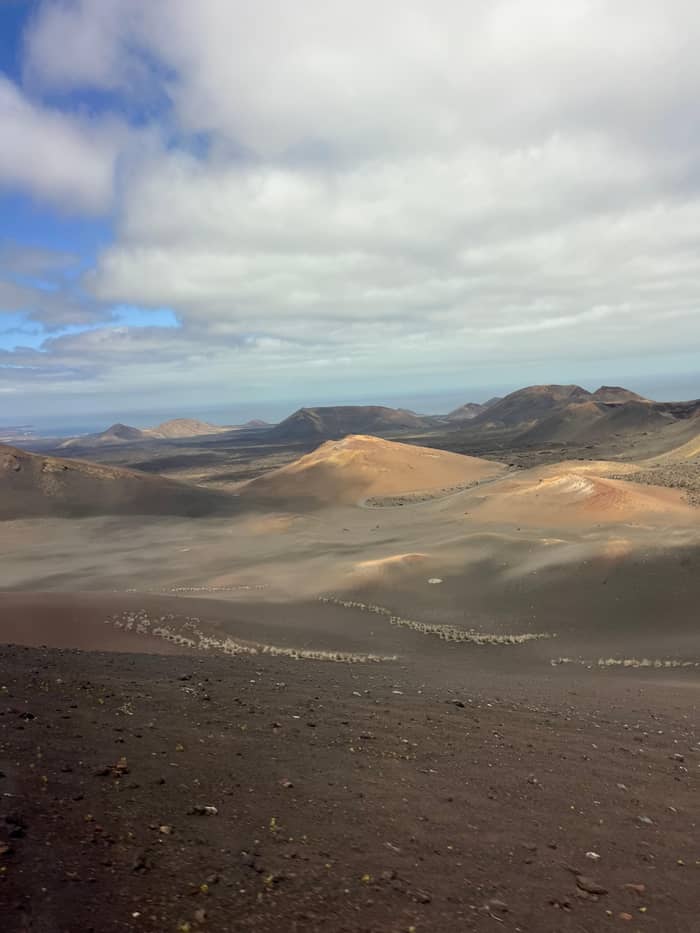
On your feet
Look and photograph
See the craters tour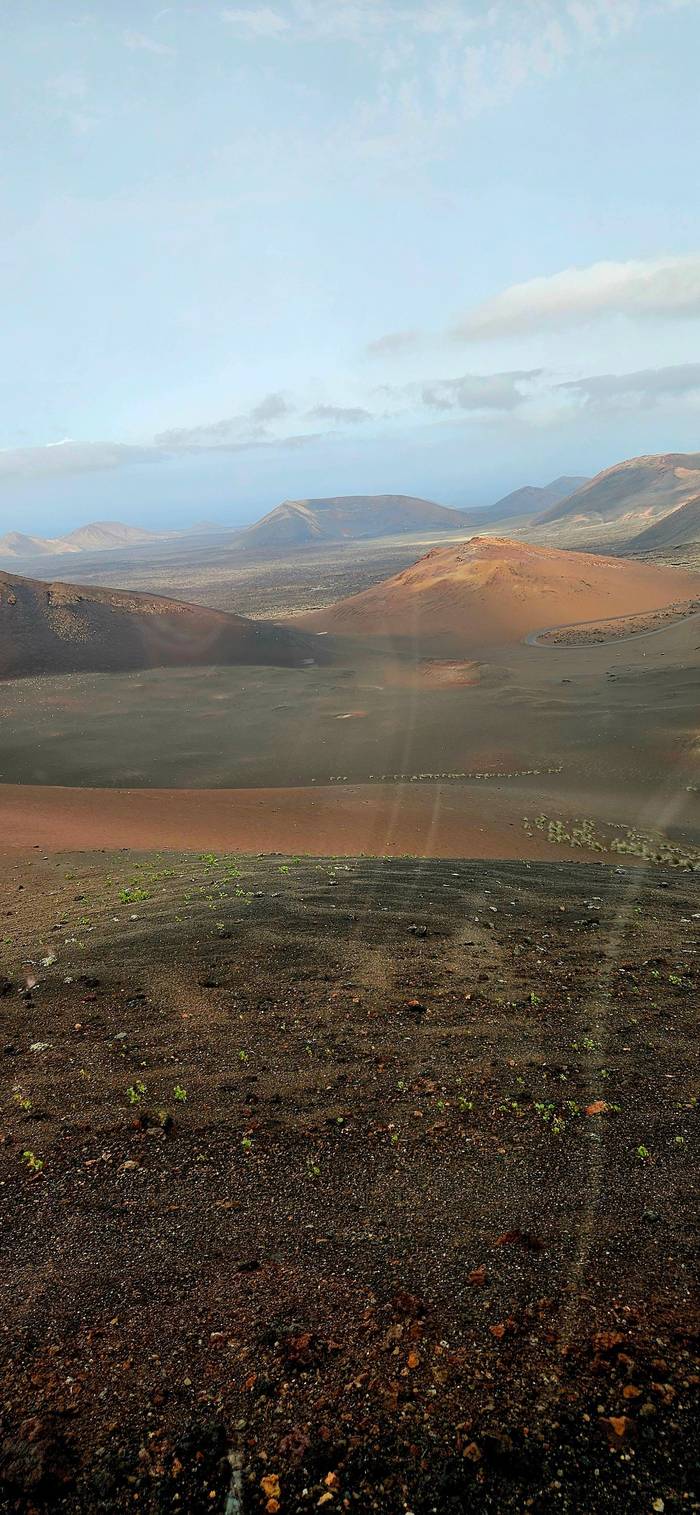
Under cover
The exhibition
The ride is short by design. The visitor guide calls it a short trip on the back of a dromedary, along a path on the south slope.2 The listing for the southern tour gives the ride as 20 minutes at an extra price. On our craters tour the listing gives the group 15 minutes at the Islote de Hilario. Its itinerary shows the optional ride beneath that stop as an extra of half an hour, so a rider should ask the guide how the time is split.
A photographer is part of the setting. The visitor guide says that on the path the dromedaries follow there is an exclusive photographer service that takes a souvenir photograph of the ride, which the visitor may buy if interested.6 You are not obliged to buy, and you may take your own pictures as well. Hold the phone steady with both hands, because the animal sways, and keep the strap on your wrist.
The stop is also a good place to look at the landscape. The ride crosses the same slopes the coach drives through, with views of the cones and the lava, and the operator's photo list also includes the natural oven and the Route of the Volcanoes.15 If you ride in wind, a cap or a scarf helps, since the operator describes the area as exposed to wind in the colder half of the year.14
Plan the day
Set your party and compare tours that pass the camel station.
4 options compared
Set your party and compare tours that pass the camel station.
≈
View≈
View≈
View≈
ViewFrom-prices on GetYourGuide, shown at the ECB reference rate. Your exact price is confirmed during booking.
The stop in order
On the approach
The Echadero de los Camellos lies 2.5 km before the El Taro entrance.5
At the station
The ride is optional on our tour and paid at the camel area.
The ride
The path crosses the south slope of the park's mountain.2
On the path
A photographer offers a souvenir picture that you may buy.6
Afterwards
The exhibition covers the traditional use of dromedaries.4
Back on the coach
The visit continues on the Route of the Volcanoes by bus.7
You do not have to ride to enjoy the stop. According to the park brochure, the Museum-Information Centre beside the camel station shows an exhibition on the park, on how dromedaries were traditionally used, and on their trappings and old farming tools.4 A reviewer of our tour found the camel museum compact but full of detail on the part camels played in the island's past. It suits the time well if the animals make you uneasy.
The restaurant on the Islote de Hilario carries the same story in a small way. The dromedary also has a place in the legend of Hilario, which the glazed Jardín Muerto inside the El Diablo restaurant retells on a bed of volcanic ash.16 It is a quiet corner, and it ties the animal to the volcano in a way that the ride alone does not.
If animal welfare is your main worry, the plain options are to watch from the station, to read the museum and to choose a tour that does not stop there. Our tour keeps the ride optional and separate from the main booking, so declining it costs you nothing in the tour itself. The decision belongs to you, and the stop remains worth making for the exhibition and the view even if you never touch an animal.
Video
We Review Everything on YouTube · Nothing is fetched until you hit play.
The dromedary was introduced by farmers as a working animal. Since the advent of tourism, it has been used solely for visitor excursions.
Clothing is the same as for the rest of the visit. For the camel stop the operator's footwear advice is comfort first, and layers follow the season.17,13,14 For a ride, add trousers that cover your legs and shoes that stay on. The listing for our tour calls the ground rough in places and advises shoes that cover the toes.
Money is the other item. Since the ride is paid directly at the camel area on our tour, carry what you need to pay the station, and ask what forms of payment it takes before you join the line. Do not count on the main tour price to cover the ride, and do not count on a refund of the optional charge if something changes. Keep the receipt for the ride separate from the booking for the coach.
Finally, plan the order of the day. The tour collects guests from 53 pickup points around the island, so the morning can start early. Reviewers of our tour asked for longer stops, so decide in advance whether the camel station, the museum or the view of the islet matters most to you, and spend your free minutes on that choice rather than on every stop.
FAQ
The park brochure says camel rides leave from the Echadero de los Camellos and the service is provided by Yaiza Town Council.1
On our craters tour it is available for an additional cost and is paid directly at the camel area.
The visitor guide says the animals found in Lanzarote are dromedaries, not camels.3
The listing for the 5-hour southern tour mentions a camel ride of 20 minutes at an extra price paid on the spot. The itinerary of our own tour shows the optional ride as half an hour.
The museum at the station has an exhibition on the traditional use of dromedaries.4
An exclusive photographer takes a souvenir photograph on the path, which you may buy.6
If an optional activity is cancelled, no refund is given for it, according to the listing for our tour.
Sources
Planning a Timanfaya tour? Ask a real person here.