Windy ridge
The cool half
October to April
See the craters tourGuides
Language
Currency
Find a datefrom €61 · cancelling is freeDeciding made easy
Two questions, one tour
Say when you travel and how you want to see the park, and the tour that fits appears with its starting price.
Recommended for you
from €61
A coach tour with pickup from 53 points and live guides in English, Spanish and French.
Recommended for you
from €59
A shorter tour that starts in Yaiza, where you can park your own car, with a visit to the park without queueing at the entrance.
Recommended for you
from €138
A 5-hour evening tour with a 3-course dinner cooked over volcanic heat and a sunset in the park.
Recommended for you
from €45
A guided hike in small groups on a 9-kilometre route across the volcanic landscapes of the eruptions.
A month-by-month look at the volcano tour: how warm the day is, when the wind bites, when the ground and the sun bring the heat, and how to choose the month and the slot.
Editorial team, timanfayatour.com · Updated November 24, 2026 · Allow 6 min
Facts at a glance
People who ask about Lanzarote Timanfaya National Park in winter are usually asking whether the tour is worth doing in the cool months, and the figures say yes. The airport station sits 15.5 km from the park, 14 m above sea level, and records a daily high of 20.9 °C in January and 22 °C in December, with lows of 14.2 °C and 15.5 °C.6,6 The island's tourism board adds that Lanzarote has a warm climate through the whole year, with an average annual temperature of about 21 degrees C.1
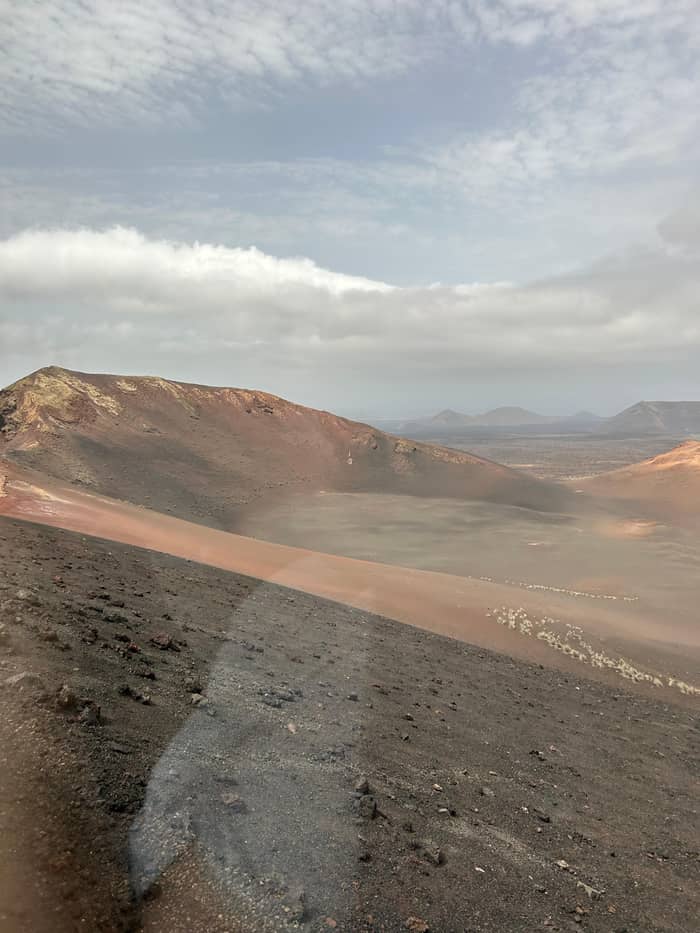
The weather that matters at Timanfaya is wind, not cold. The operator advises warm clothing from October to April, as this is a windy area, and that advice covers the whole winter half of the year.2 A layer that comes off in the sun and goes back on in the wind is the sensible kit. On the coach you are mostly inside, but the stop at the Islote de Hilario is in the open air.
The operator publishes no figures on visitor numbers by month, so nothing here can promise a quiet winter. What you can rely on is the sunshine: the tourism board writes that rain is scarce and the sun shines nearly all year.5 The tour can be cancelled for free until the day before if the forecast looks wrong.
Month by month
| Months | Daily high | Daily low | What to carry |
|---|---|---|---|
| December to February | 20.9 to 22 °C6,6,6 | 14.2 to 15.5 °C6,6,6 | Warm clothing for the wind2 |
| March | 22.9 °C6 | 15.2 °C6 | A light layer2 |
| April | 23.8 °C6 | 16.1 °C6 | A light layer2 |
| May | 25.2 °C6 | 17.5 °C6 | A layer and a cap3 |
| June | 26.7 °C6 | 19.2 °C6 | A cap or sun protection3 |
| July and August | 28.3 to 29.5 °C6,6 | 20.7 to 21.5 °C6,6 | A cap and water3 |
| September | 28.6 °C6 | 21 °C6 | A cap or sun protection3 |
| October | 27 °C6 | 19.6 °C6 | Warm clothing for the wind2 |
| November | 24.3 °C6 | 17.4 °C6 | Warm clothing for the wind2 |
Temperatures are monthly averages at the Lanzarote airport station, 15.5 km from the park and 14 m above sea level, so the park itself can differ.6
Spring is the middle ground. The airport station gives a daily high of 22.9 °C in March, 23.8 °C in April and 25.2 °C in May, with lows of 15.2 °C, 16.1 °C and 17.5 °C.6,6,6 That is warm enough to ride the coach in a light shirt, and mild enough that the short walk between the coach and the demonstrations is comfortable. April still falls inside the operator's windy-season advice, so a light jacket stays in the bag until the end of the month.
The clothing advice changes in the middle of the season. The operator's cool-season advice runs to the end of April, and its sun advice starts in June, which leaves May as the month between those pieces of advice.2,3 Take both a layer and a cap in May, and decide on the day by the sky and the wind at the car park.
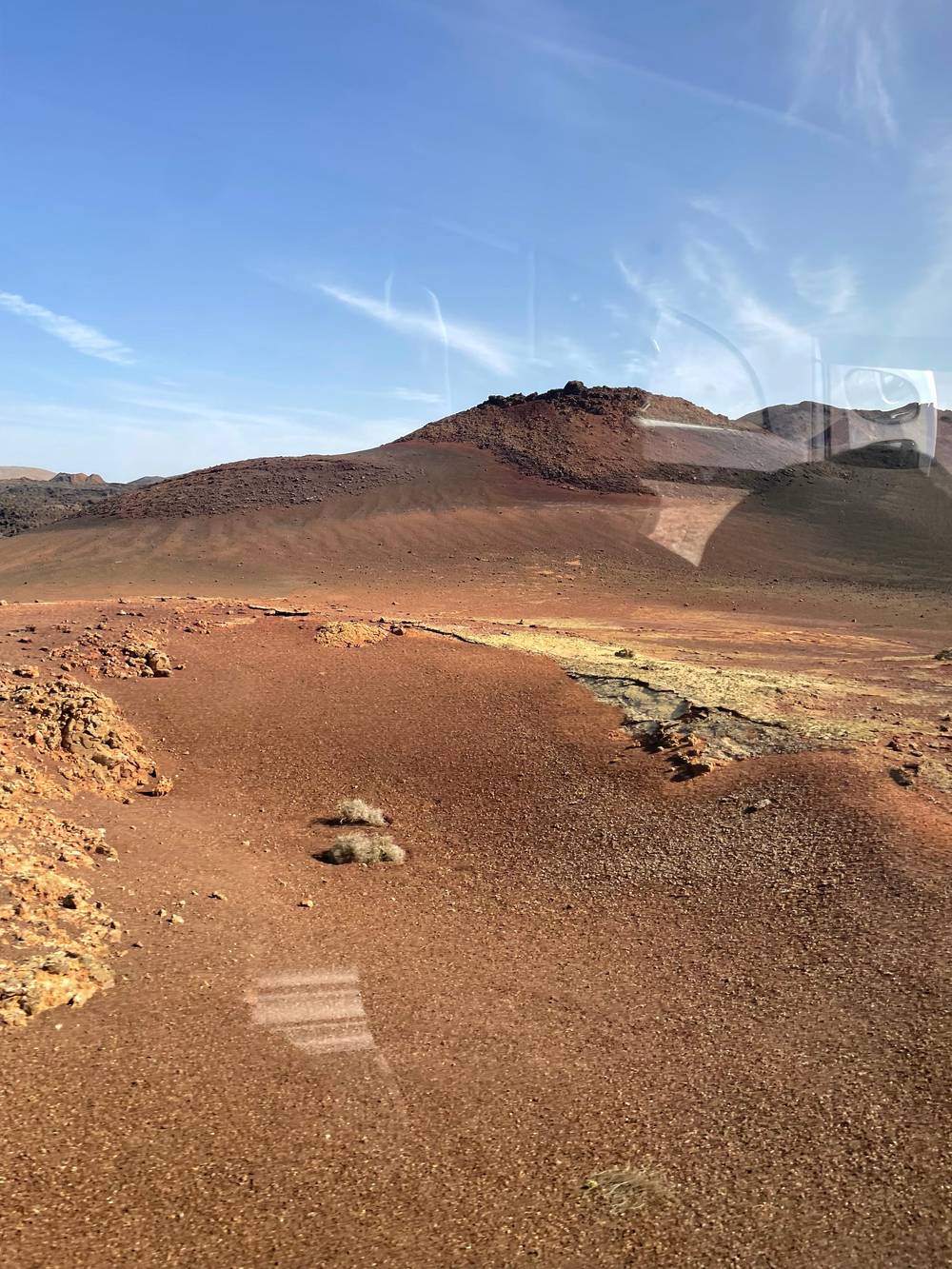
The ground itself does not follow the calendar. The operator warns that the ground reaches very high temperatures in certain areas, and visitors must stay in the designated areas.7 The geothermal demonstrations show heat that comes from below the surface, so they work the same way in March as in August, and the show is not season-dependent in the way a beach day would be.
Through the year
Each month shows mid-month hours without sun and days with at least 2.5 mm of precipitation. NOAA station Lanzarote airport, 15.5 km from the park at 14 m, period 1991 to 2020.6
Summer is the hottest stretch. The airport station records a daily high of 26.7 °C in June, 28.3 °C in July, 29.5 °C in August and 28.6 °C in September, with lows between 19.2 °C and 21.5 °C.6,6,6,6 The station is 15.5 km from the park, so treat these numbers as a guide to the day and not as a reading taken at the stop.6
The operator's advice for June to September is a cap or sun protection, together with comfortable clothing and footwear.3,8 The listing's footwear note, trainers that cover the toes, suits summer as much as winter. Take water along as well, and keep it in the shade of the bag while you walk between the coach and the demonstrations. The islet is open ground, so the sun reaches you at every stop, and the black surface gives the heat back.
The cafe is the place to spend spare minutes in the heat. A reviewer writing in July would have liked 30 minutes at the cafe instead of 15, toilet break included. If you travel in the hottest months, put the cafe and the shade first on your list for the stop, and drink there before you go back to the coach. A short pause in the shade is worth more than another photograph from the car park.
The seasons
Windy ridge
October to April
See the craters tour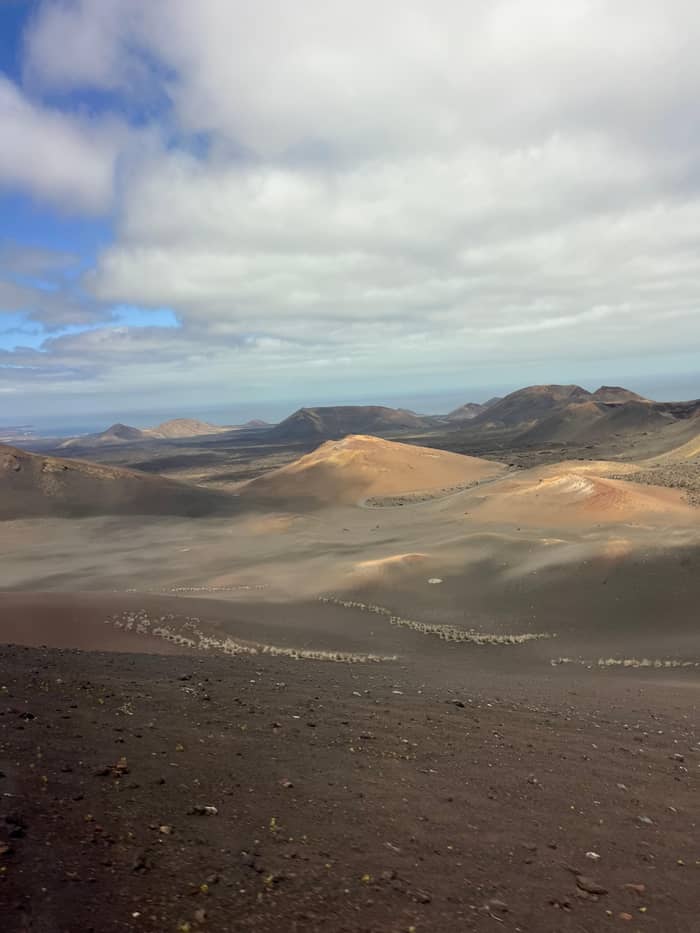
Sun on black ground
June to September
See the craters tour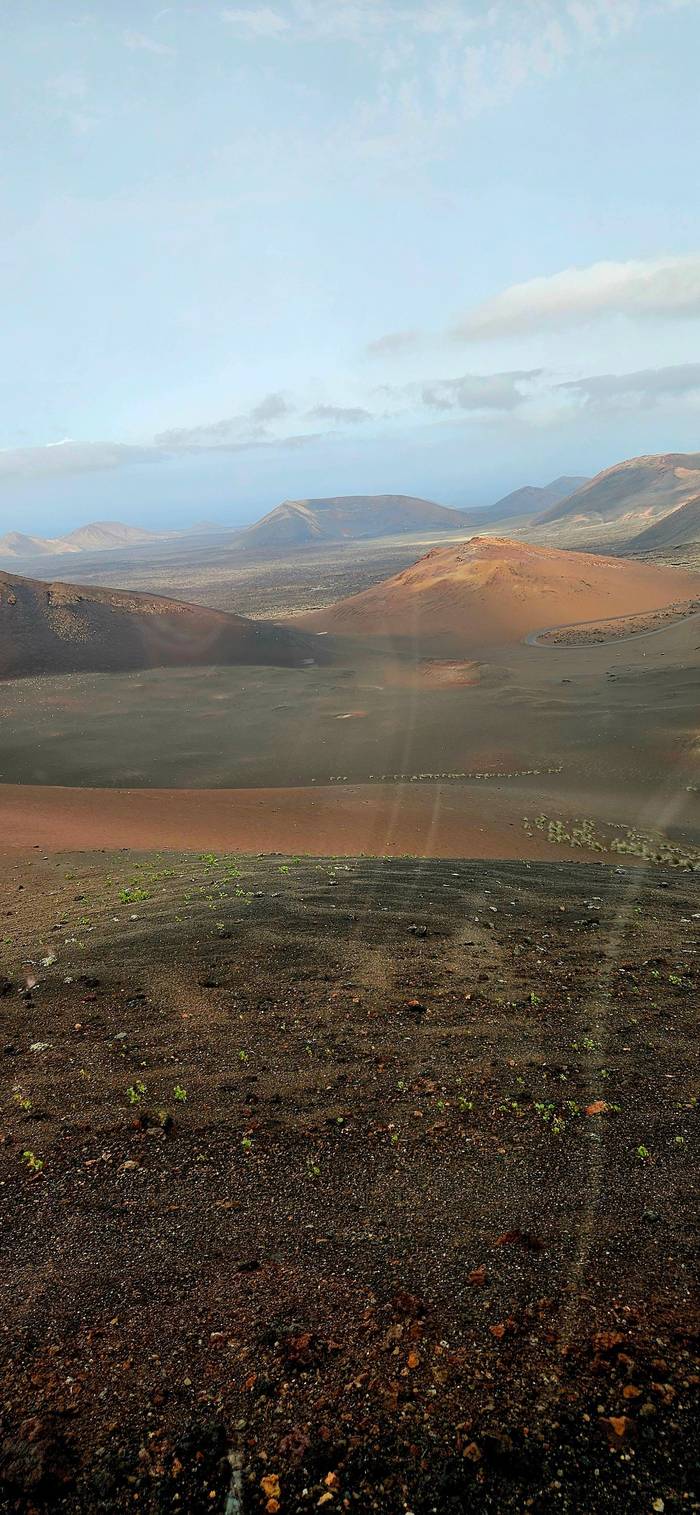
In between
May and October
See the craters tourFor anyone searching Lanzarote Timanfaya National Park in October, the airport station gives a daily high of 27 °C and a low of 19.6 °C, which is close to the temperatures of June.6,6 The advice for the month is already the winter advice, though: the operator's warm clothing recommendation starts in October, because the wind can pick up on an open ridge.2 A light jacket in the bag is enough.
November is milder at the station: highs reach 24.3 °C and lows 17.4 °C.6 The park brochure gives the annual average rainfall as no more than 125 mm, and the tourism board speaks of scarce rainfall.9,5 A rainy day is therefore a rare thing in any autumn month. If rain does arrive, the free cancellation of up to 24 hours before the start gives some protection.
The small-group Insólita Experience at Montañas del Fuego runs on fixed days. The operator lists an 08:45 start and a length of 120 minutes, on Mondays, Wednesdays and Saturdays.10 It is a long morning out in the open, so follow the clothing advice for the month and bring something warm for the early start.
Plan the day
Set your party and compare tours across the year.
4 options compared
Set your party and compare tours across the year.
≈
View≈
View≈
View≈
ViewFrom-prices on GetYourGuide, shown at the ECB reference rate. Your exact price is confirmed during booking.
The year in order
December to February
March to May
June
The operator advises a cap or sun protection from June.3
July and August
The station records 28.3 °C in July and 29.5 °C in August.6,6
September
The daily high is 28.6 °C at the station.6
October and November
The operator's winter advice starts in October.2
There is a weather event worth knowing about, and it is not rain. On days of calima, the Canary Islands government and the state meteorological agency AEMET report an adverse weather phenomenon due to suspended dust, and the government issues a pre-alert.11 The dust is mineral and comes from the African side, and it turns the sky pale and the distance hazy. It is a reason to check the sky on the morning of the tour.
The health advice is official and simple. The Canary Islands health department advises avoiding physical effort outdoors during a calima episode.12 A bus tour asks for little effort, but a day with dust is a poor day for photographs, and for anyone with a breathing condition it is a day to read the notice and decide carefully.
The listing for our tour gives you room to decide. The full price comes back if you cancel a day ahead, and the Timanfaya Interpretation Centre is the named fallback if the park is shut. Check the forecast the day before, and move the booking if it calls for dust or strong wind. A hazy day does not damage the coach ride, but it takes the contrast out of the cones, and the views are most of the reason to go.
Video
Lanzarote Information on YouTube · Nothing is fetched until you hit play.
Lanzarote possesses a warm climate throughout the entire year, with an average annual temperature of about 21ºC
Asked for the best time to visit Timanfaya, the plain answer is that the park is open every day, 365 days a year, from 09:00 to 15:45 on the operator's listing.4 No month closes it, so the choice is about comfort and light, not about access. Winter suits anyone who dislikes heat, summer suits anyone who wants long days on the island, and the months between give both kinds of weather within a single week.
Slots are what fill, not months. The operator explains that if the entry time you want is not available, the quota for that time slot is already full, and it suggests checking other times or dates.13 Tickets are sold online only, you must arrive 15 minutes before your time, and you cannot enter before or after the selected time.14,15,16 Book early for the days and hours you care about.
A coach tour with pickup removes most of that planning. Our craters tour starts from €61 and lists pickup from 53 points. If you want to compare it with the express tour that starts at Yaiza or the evening tour with a dinner cooked over volcanic heat, the comparison tools on this page show their prices side by side.
FAQ
The park brochure gives an annual average rainfall of no more than 125 mm.9
AEMET reports an adverse phenomenon due to suspended dust and the Canary Islands government issues a pre-alert.11
Our listing returns the full price for a cancellation made a day ahead.
Sources
Planning a Timanfaya tour? Ask a real person here.